I have been in this industry for nearly twenty years. I have seen agencies come and go. I have watched the same model, the retainer model, produce the same outcomes for clients: activity without accountability, reports without revenue, and relationships that exist primarily to protect the invoice.
This article is not a criticism of agencies generally. There are excellent agencies doing excellent work. But the dominant model, the one most $5M to $20M businesses encounter when they go looking for marketing help, is fundamentally misaligned with what those businesses actually need.
The problem with the retainer model
The retainer model was designed for a different era of marketing. When media buying was opaque, when data was scarce, and when clients genuinely could not evaluate the work being done on their behalf, retainers made sense. You paid for access to expertise you could not easily replicate internally.
That world no longer exists. Data is abundant. Attribution is sophisticated. Any competent marketing team can, in theory, measure whether their spend is producing returns. And yet the retainer model persists, because it is extremely profitable for agencies and extremely difficult for clients to challenge.
"Most agencies report on impressions, clicks, and platform metrics. Not revenue. They look busy. Your growth plateaus. When you ask hard questions, you get dashboards, not answers."
Here is the specific mechanics of how the model fails:
- Agencies optimise for account longevity, not client growth. A client who is growing confidently and independently is a churn risk. A client dependent on agency-managed complexity is a retained client.
- Reporting is designed to show activity, not outcomes. Impressions, reach, click-through rates — these are easy to generate and easy to present. Revenue attribution is hard. Most agencies avoid it.
- The agency's P&L is disconnected from the client's P&L. When the agency earns the same fee regardless of whether your revenue grows, there is no alignment of incentive.
- Strategy is often retrofitted onto execution. Many agencies start with the channels they know how to sell and build a strategy around them. The client's commercial objectives come second.
What we built instead
When I founded Market Ease in 2006, I was determined to build something different. Not because I had a grand theory about the future of marketing, but because I had seen enough client frustration to know that the standard model was not good enough.
Over the following two decades, we built four things that most agencies do not have:
1. A proprietary intelligence layer
Before we spend a dollar of anyone's media budget, we build a structured understanding of who their buyers are, how they make decisions, and what messages actually move them. This is not a generic buyer persona. It is a data-backed intelligence layer built from the client's first-party data combined with third-party market signals — what we call Consumer Intelligence.
We invested in building a data science capability when no one else in the agency space in Adelaide was doing it. That investment now sits at the foundation of everything we do.
2. Revenue as the only metric that matters
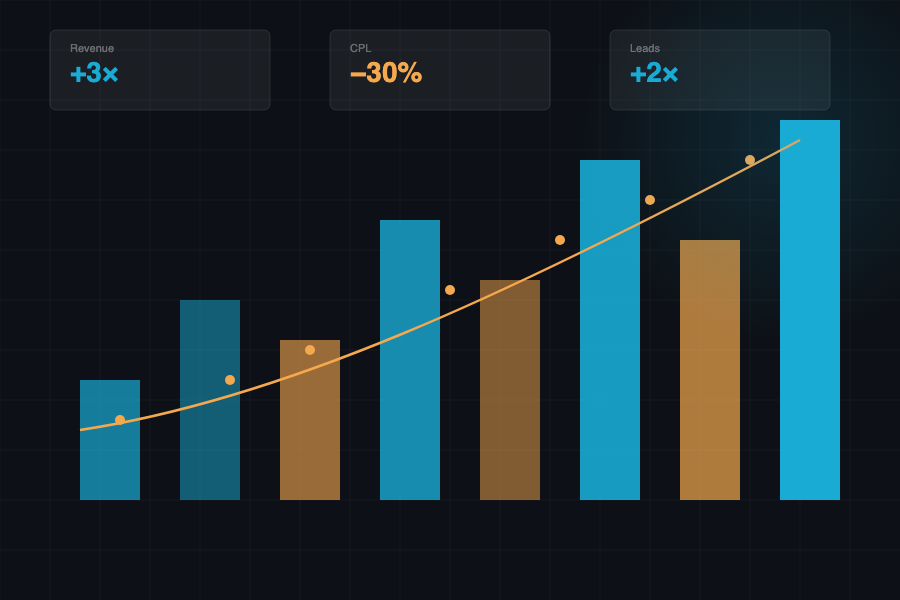
We do not present reports that show platform metrics. We present reports that show cost per lead, cost per acquisition, and revenue attributed to media. If we cannot draw a straight line from a dollar of spend to a business outcome, we fix that before we scale anything. This is the foundation of our Digital Leverage Program — integrated paid media built on intelligence, not guesswork.
This requires access to data that many clients are reluctant to share: CRM data, sales pipeline data, revenue by customer. We ask for it. Businesses that share it get meaningfully better results.
3. Integrated creative and media under one roof
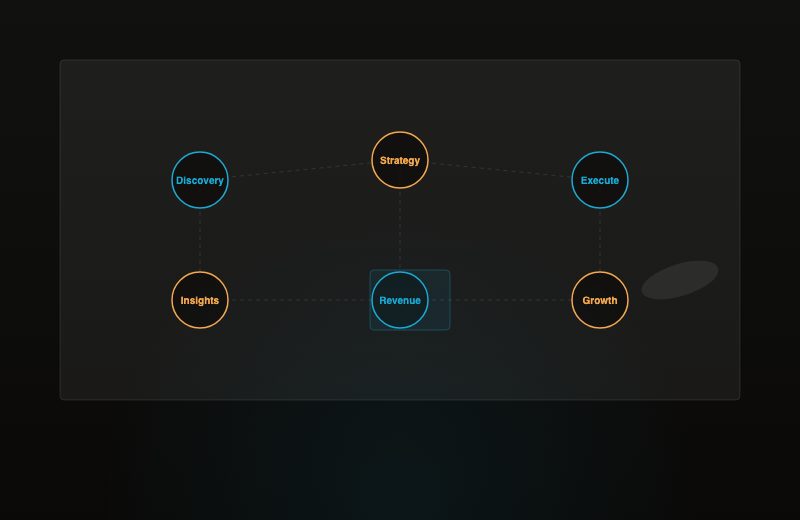
Through our acquisition of Typeface Productions, our creative team works in the same environment as our media and intelligence team. The brief does not go from strategy to creative to media. The brief comes from the intelligence layer and informs all three simultaneously.
4. An advisory structure that holds us accountable
Our advisory board, which includes the founder of a $200M global automation company, a leading academic authority on business growth, and a former NYSE-listed company managing director, exists in part to hold us to the same standard of accountability we hold our clients to.
The bottom line: If your agency cannot tell you, in plain language, what revenue your marketing spend is producing and why — that is not a data problem. That is a model problem. The standard retainer model does not require that answer to exist.
Is this right for your business?
The Market Ease model works best for businesses that are ready for genuine accountability. That means sharing your revenue data. It means accepting that the first 90 days of any engagement involves intelligence work before execution starts. It means being willing to have hard conversations about what is not working.
It does not work for businesses that want a quiet life, a low monthly fee, and the comfort of regular activity reports. There are plenty of agencies that will give you that. We are not one of them.
If you are a business turning over $5M to $20M, and you are tired of paying for activity rather than outcomes, book a discovery call. We will tell you honestly within 30 minutes whether we think we can make a genuine difference.